


The Ultimate Guide To Kitchen Storage Containers: Organize Your Pantry Like A Pro
May 25, 2026
Leave a message

A well-organized kitchen is more than just visually appealing-it saves time, reduces food waste, and makes everyday cooking more enjoyable. Whether you're storing rice, pasta, flour, snacks, or baking ingredients, choosing the right kitchen storage containers can transform the way you use your space.
In this guide, we'll explore everything you need to know about kitchen storage containers, including how to choose the right ones, organize your pantry efficiently, and keep food fresher for longer.
Why Kitchen Storage Containers Matter
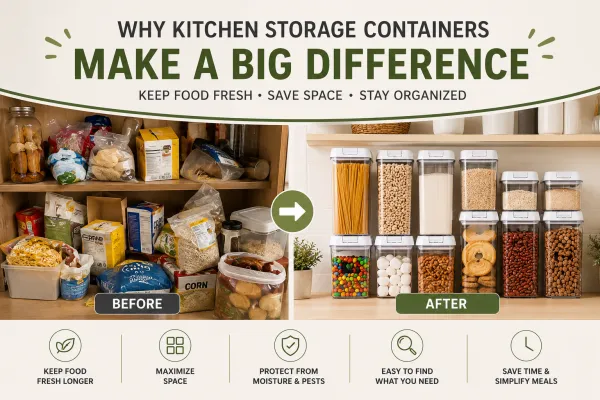
Many households store food in its original packaging. While convenient, opened bags and boxes often lead to clutter, spills, and reduced freshness.
Using dedicated food storage containers offers several benefits:
Keeps dry food fresh for longer
Protects food from moisture and pests
Maximizes pantry space
Makes ingredients easy to find
Creates a clean and organized appearance
Reduces food waste
A simple storage system can make a significant difference in your daily routine.
Common Pantry Storage Problems
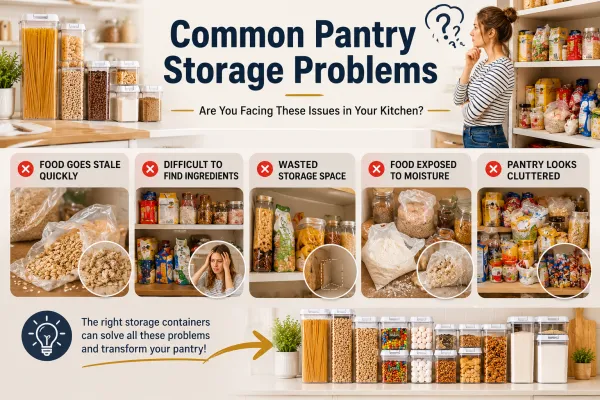
Before choosing storage containers, it's important to understand the most common pantry challenges.
Food Goes Stale Quickly
Flour, rice, cereal, and snacks can lose freshness when exposed to air.
Difficult to Find Ingredients
Multiple half-open packages create confusion and waste valuable time.
Wasted Storage Space
Different package sizes often leave unused gaps on shelves.
Pantry Looks Cluttered
Mismatched packaging can make even a large pantry feel disorganized.
The right storage containers solve all of these issues.
Types of Kitchen Storage Containers
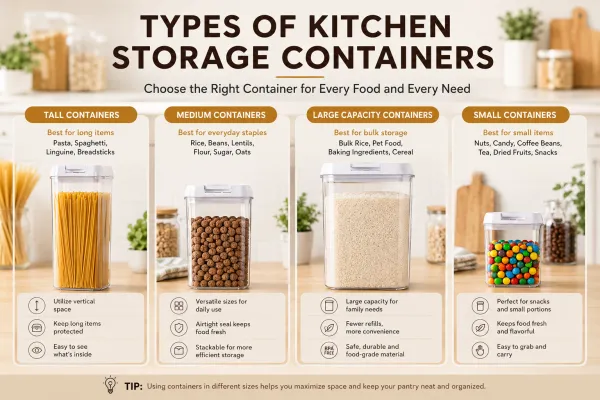
Different foods require different storage solutions.
Tall Containers

Best for:
Spaghetti
Linguine
Long pasta
Breadsticks
Tall containers utilize vertical space while keeping long items protected.
Medium Containers

Best for:
Rice
Beans
Lentils
Sugar
Flour
These versatile containers are ideal for everyday pantry staples.
Large Capacity Containers

Best for:
Bulk rice
Pet food
Baking ingredients
Family-sized food storage
Large containers reduce the need for frequent refilling.
Small Containers

Best for:
Candy
Nuts
Coffee beans
Tea
Dried fruits
Small containers help keep frequently used items organized and accessible.
Why Clear Storage Containers Are Better
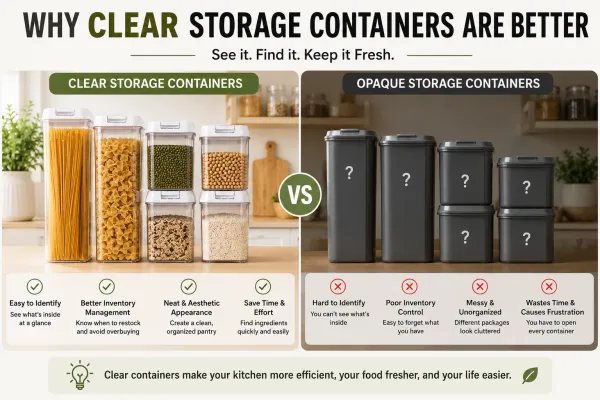
Transparent containers have become increasingly popular in modern kitchens.
Easy Identification
You can instantly see what's inside without opening the lid.
Better Inventory Management
Knowing exactly how much food remains helps prevent unnecessary purchases.
Consistent Pantry Appearance
Matching containers create a clean, professional look.
Faster Meal Preparation
Ingredients are easier to locate when everything is visible.
For busy families, visibility alone can save significant time every week.
Airtight Containers: The Key to Food Freshness
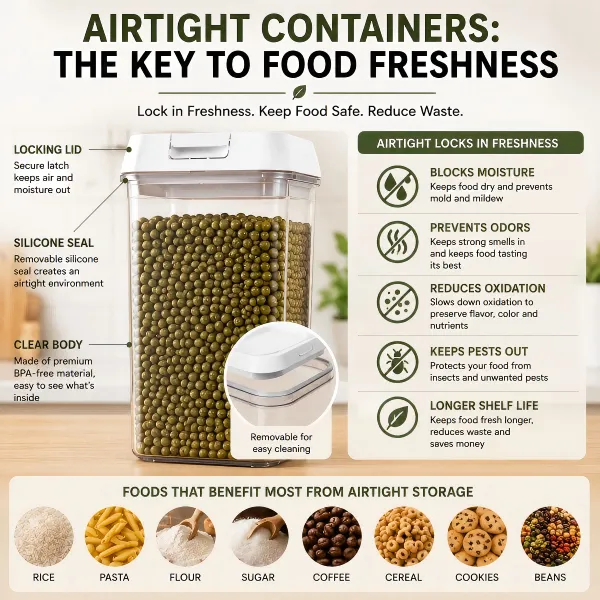
One of the most important features of a quality storage container is an airtight seal.
Airtight containers help:
Block moisture
Prevent odors
Reduce oxidation
Keep insects away
Preserve texture and flavor
Foods that benefit most from airtight storage include:
Rice
Pasta
Flour
Sugar
Coffee
Cereal
Cookies
Dried beans
Proper sealing can significantly extend shelf life while maintaining food quality.
How to Organize Your Pantry Step by Step

Creating an organized pantry doesn't have to be complicated.
Step 1: Empty Your Pantry
Remove all food items and clean the shelves thoroughly.
Step 2: Check Expiration Dates
Discard expired products and consolidate duplicate items.
Step 3: Group Similar Foods Together
Create categories such as:
Baking supplies
Breakfast foods
Snacks
Grains
Pasta
Canned goods
Step 4: Transfer Foods Into Containers
Move dry foods into appropriately sized storage containers.
Step 5: Add Labels
Labels make identification quick and consistent.
Step 6: Arrange by Frequency of Use
Place frequently used items at eye level for easy access.
Recommended Containers for Different Foods

| Food Type | Recommended Container |
|---|---|
| Rice | Medium or Large Airtight Container |
| Pasta | Tall Storage Container |
| Flour | Airtight Medium Container |
| Sugar | Airtight Medium Container |
| Beans | Medium Storage Container |
| Cookies | Wide Airtight Container |
| Candy | Small Clear Container |
| Cereal | Large Airtight Container |
| Coffee Beans | Small Airtight Container |
| Marshmallows | Small Container |
Choosing the correct size helps maximize both storage efficiency and convenience.
Pantry Organization Tips for Small Kitchens

Even limited spaces can become highly functional with the right strategy.
Use Vertical Space
Stackable containers allow you to maximize shelf height.
Standardize Container Sizes
Uniform containers create a cleaner look and fit together more efficiently.
Label Everything
Consistent labeling reduces confusion and keeps family members organized.
Store Similar Items Together
Grouping foods improves accessibility and reduces clutter.
Keep Frequently Used Foods Visible
Store daily essentials where they are easiest to reach.
Choosing the Right Storage Containers
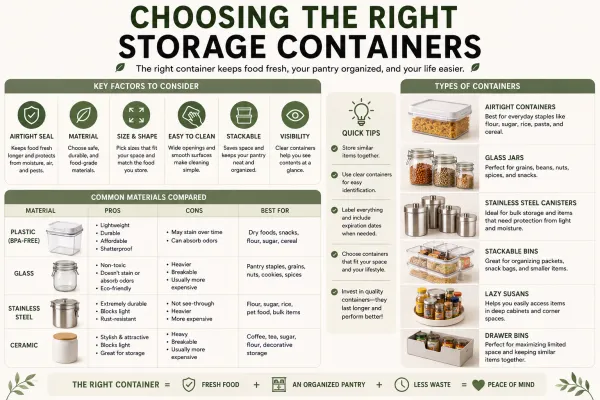
When shopping for kitchen storage containers, consider the following:
Material
BPA-free plastic
Glass
Food-grade polypropylene
Seal Quality
Look for secure airtight lids that prevent leaks and moisture intrusion.
Transparency
Clear containers improve visibility and organization.
Capacity
Select sizes based on household consumption habits.
Stackability
Containers designed for stacking can significantly increase storage efficiency.
Frequently Asked Questions

Are airtight containers really necessary?
Yes. Airtight containers help preserve freshness, reduce moisture exposure, and protect food from pests.
What foods should not be stored in airtight containers?
Fresh produce often requires airflow and may not be suitable for fully sealed containers.
How often should pantry containers be cleaned?
A thorough cleaning every few months is recommended, especially before refilling.
Are clear containers better than opaque containers?
For most pantry applications, clear containers provide better visibility and inventory control.
Final Thoughts

Kitchen organization is not just about aesthetics-it's about creating a more efficient, functional, and enjoyable home.
The right storage containers help protect food, reduce waste, save space, and simplify daily life. Whether you're organizing a small apartment kitchen or a large family pantry, investing in quality food storage containers is one of the easiest ways to improve your home organization system.
By selecting airtight, transparent, and appropriately sized containers, you can create a pantry that is both beautiful and practical for years to come.
A well-organized pantry is more than just a trend-it's a smarter way to store food, reduce waste, and simplify daily life.
Thank you for taking the time to read this guide. We hope these pantry organization tips inspire you to create a cleaner, more functional kitchen.

Follow Lavinia Home for more home organization inspiration, storage solutions, and practical ideas that help make everyday living easier.