


Plastic Suit Hangers: The Overlooked Environmental Crisis in Fashion
Feb 26, 2025
Leave a message

Plastic suit hangers, often dismissed as trivial components of the fashion industry, have quietly burgeoned into a global environmental crisis. While their sleek, minimalist designs blend seamlessly into modern closets, their lifecycle-from fossil fuel extraction to landfill decay-paints a starkly different picture. This article delves into the multifaceted environmental toll of plastic hangers, explores systemic failures in sustainability, and proposes actionable solutions to transform this overlooked issue into an opportunity for systemic change.
The Hidden Environmental Toll: Beyond Convenience

1. A Global Mountain of Waste
The scale of plastic hanger consumption is staggering. The global garment industry produces over 10 billion plastic hangers annually , with fast fashion accelerating demand. In the U.S. alone, approximately 850 million hangers are discarded each year, enough to circle the Earth 15 times. These figures are compounded by single-use practices: retailers often discard hangers after shipping garments, while consumers replace broken plastic hangers due to their fragility.
2. Carbon Footprint and Toxic Legacy
Producing a single plastic hanger emits 0.16 kg of CO₂ , but cumulative emissions are monumental. Polypropylene, the primary material, relies on petrochemical refining-a process that releases carcinogens like benzene and volatile organic compounds (VOCs). During degradation, hangers leach endocrine-disrupting chemicals such as phthalates and bisphenol A (BPA) into soil and waterways. A 2023 study inEnvironmental Science & Technology found microplastics from hangers in 85% of freshwater samples near urban landfills, infiltrating food chains and threatening aquatic life.
3. Structural Weaknesses and Waste Multiplier
Despite being marketed as durable, many plastic hangers warp under the weight of heavy garments or degrade under UV exposure. Their thin edges can distort delicate fabrics, leading to 12–15% of garment defects in luxury fashion, as reported by the Sustainable Apparel Coalition. This creates a ripple effect: damaged clothing is discarded prematurely, amplifying textile waste.
Why Plastic Hangers Fail Sustainability Tests
1. Recycling Illusions
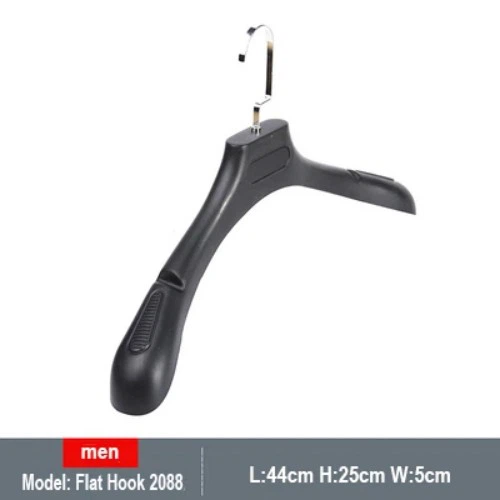
Only 15% of plastic hangers are recycled globally, hindered by mixed materials (e.g., metal hooks) and non-standard shapes that clog sorting machinery. Municipal programs often exclude hangers due to contamination risks from dyes and adhesives. In developing nations, informal waste pickers frequently burn hangers to extract metal, releasing toxic fumes.
2. Linear Supply Chains
Retailers prioritize plastic hangers for their low cost (€0.05–0.10/unit) and lightweight shipping benefits. However, reverse logistics for reuse are rare. A 2022 report by the Ellen MacArthur Foundation revealed that 90% of hangers are discarded post-delivery , perpetuating a "take-make-waste" model.
3. Consumer Disengagement
Lack of awareness exacerbates the crisis. A 2023 YouGov survey found that 68% of consumers believe plastic hangers are fully recyclable, while only 22% actively seek alternatives.
Sustainable Alternatives: From Niche to Norm

For Consumers: Rethinking Wardrobe Infrastructure
Wooden Hangers : Bamboo and FSC-certified hardwood hangers offer strength and biodegradability. Brands like EcoHanger use water-based finishes to minimize chemical runoff.
Recycled Metal : Stainless steel hangers endure decades of use and are 100% recyclable. Companies like Hangerloop offer take-back programs for refurbishment.
Innovative Materials : Mushroom mycelium and agricultural waste composites are emerging as biodegradable options. Ecovative Design has prototyped hangers that decompose in 30–90 days.
For Retailers: Redesigning Systems
Paper-Based Solutions : IKEA's Renewable Cardboard Hangers reduced plastic use by 70% in 2022, while maintaining structural integrity for shipping.
Closed-Loop Partnerships : H&M's collaboration with TerraCycle enables in-store hanger recycling, diverting 1.2 million units annually.
Digital Innovations : RFID-tagged hangers track inventory and enable bulk returns, reducing overproduction.
Policy and Innovation: Scaling Solutions
Extended Producer Responsibility (EPR) : France's Anti-Waste Law mandates hanger recycling targets, funded by manufacturer fees. Similar policies in California could divert 200 million hangers from landfills by 2030.
Material Science Breakthroughs : Startups like Notpla are developing seaweed-based hangers that dissolve in water, eliminating waste entirely.
Global Standards : The UN Fashion Charter now includes hanger sustainability metrics, pushing brands to adopt ISO 14064-compliant practices.
Case Studies: Success and Scalability

Japan's Zero-Waste Hanger Initiative
In 2021, Uniqlo partnered with local governments to collect 500,000 hangers for pelletizing into park benches. The program achieved a 92% customer participation rate through loyalty rewards.
Luxury Sector Leadership
Burberry's ReBurberry Hanger uses recycled polyester and incorporates a QR code linking to garment care tips, extending product lifespans by 30%.
Conclusion: From Silent Pollutants to Circular Icons

Plastic hangers epitomize the fashion industry's reliance on hidden, linear systems. Yet, their ubiquity also presents a unique opportunity: by replacing 10 billion hangers with sustainable alternatives, we could eliminate 1.6 million metric tons of CO₂ annually -equivalent to taking 350,000 cars off roads.
The path forward demands collaboration:
Consumers must demand transparency and vote with their wallets.
Brands must invest in circular design and EPR compliance.
Policymakers must incentivize innovation through tax breaks and regulations.
As the adage goes, "There are no small actors in sustainability-only small actions." Plastic hangers, once invisible, can become symbols of a fashion revolution. The choice is ours: let closets remain cemeteries of convenience or transform them into hubs of circularity.

Follow LAVINIA HOME for more technical and professional industry knowledge.